
No-Pull Dog Harness Guide: Front Clip vs. Back Clip and How to Fit One
Quick answer: A no-pull dog harness reduces pulling by attaching the leash at the front of the chest. When your dog pulls, the front clip gently turns them sideways and back toward you, so pulling stops working. Choose a Y-shaped harness that leaves the shoulders free, fits with two fingers of space under each strap, and pair it with reward-based leash training.
If every walk feels like water-skiing behind your dog, you are not alone. Leash pulling is one of the most common complaints dog owners have, and the right harness can make walks safer and much more pleasant. But not all harnesses reduce pulling, and some can even make it worse.
This guide explains how no-pull harnesses work, compares front clip and back clip designs, shows how to measure and fit a harness, and covers the training that makes the difference.
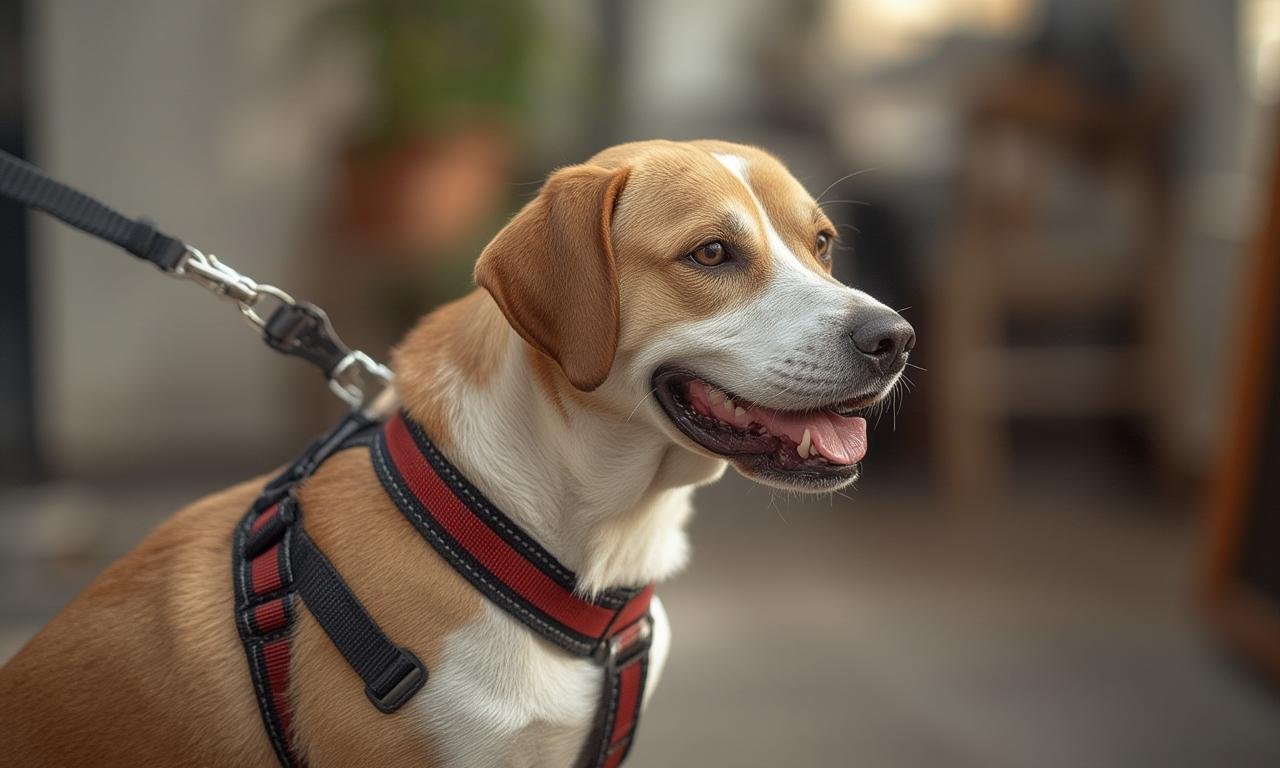
Harness or collar?
Collars are fine for ID tags and calm walkers, but a dog that pulls hard on a collar puts pressure on the neck and throat. Many vets and trainers recommend a harness for dogs that pull, small breeds prone to tracheal collapse, flat-faced breeds like Pugs and French Bulldogs, and dogs with neck or back problems.
How does a no-pull dog harness work?
Most no-pull harnesses have a leash ring on the chest strap. When the dog leans forward, the leash pressure turns their body to the side. The dog loses the forward momentum it gets from pulling, which makes it easier for you to stop and redirect. Back-clip harnesses work the opposite way: the dog can lean into the chest strap, which can actually make pulling more comfortable, a bit like a sled-dog harness.
Front clip vs. back clip vs. dual clip
| Type | Leash attaches | Best for | Watch for |
|---|---|---|---|
| Front clip (no-pull) | Center of the chest | Dogs that pull, training loose-leash walking | Leash can tangle in the front legs |
| Back clip | Between the shoulder blades | Calm walkers, small dogs, running | Can encourage pulling in strong dogs |
| Dual clip | Chest and back | Training plus everyday walks; use both with a double-ended leash for more control | Slightly more straps to adjust |
| Step-in | Back | Small dogs that dislike things over their head | Less control for pullers |
| Hiking / support | Back, often with a handle | Adventure, helping older dogs over obstacles | Bulkier, warmer |
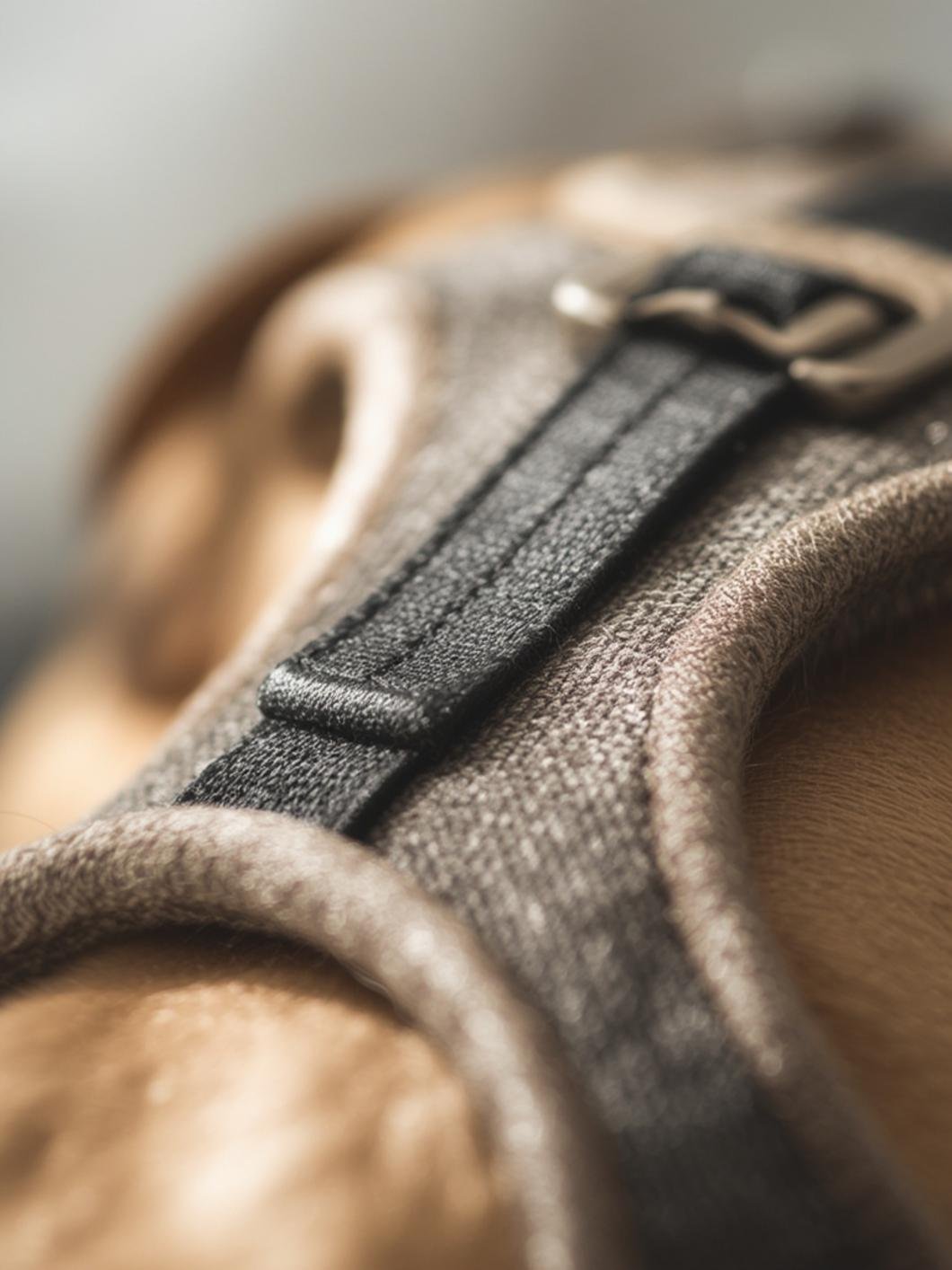
What to look for in a dog harness with a front clip
- Y-shaped front: straps that form a Y on the chest leave the shoulders free to move. Harnesses with a straight strap across the front of the shoulders can restrict normal stride.
- At least 4 adjustment points: two around the neck and two around the chest give a better fit.
- Padding where straps touch: helps prevent rubbing behind the front legs.
- Sturdy metal rings and buckles: especially for strong or large dogs.
- Reflective trim: useful for early-morning and evening walks.
- A back clip too: a dual-clip design lets you switch as your dog’s leash manners improve.
Popular front-clip and dual-clip designs include models from PetSafe (Easy Walk), Ruffwear (Front Range), Blue-9 (Balance Harness) and 2 Hounds Design (Freedom). Compare their fit and adjustment points against your dog’s shape rather than relying on brand alone.
How to measure your dog for a harness
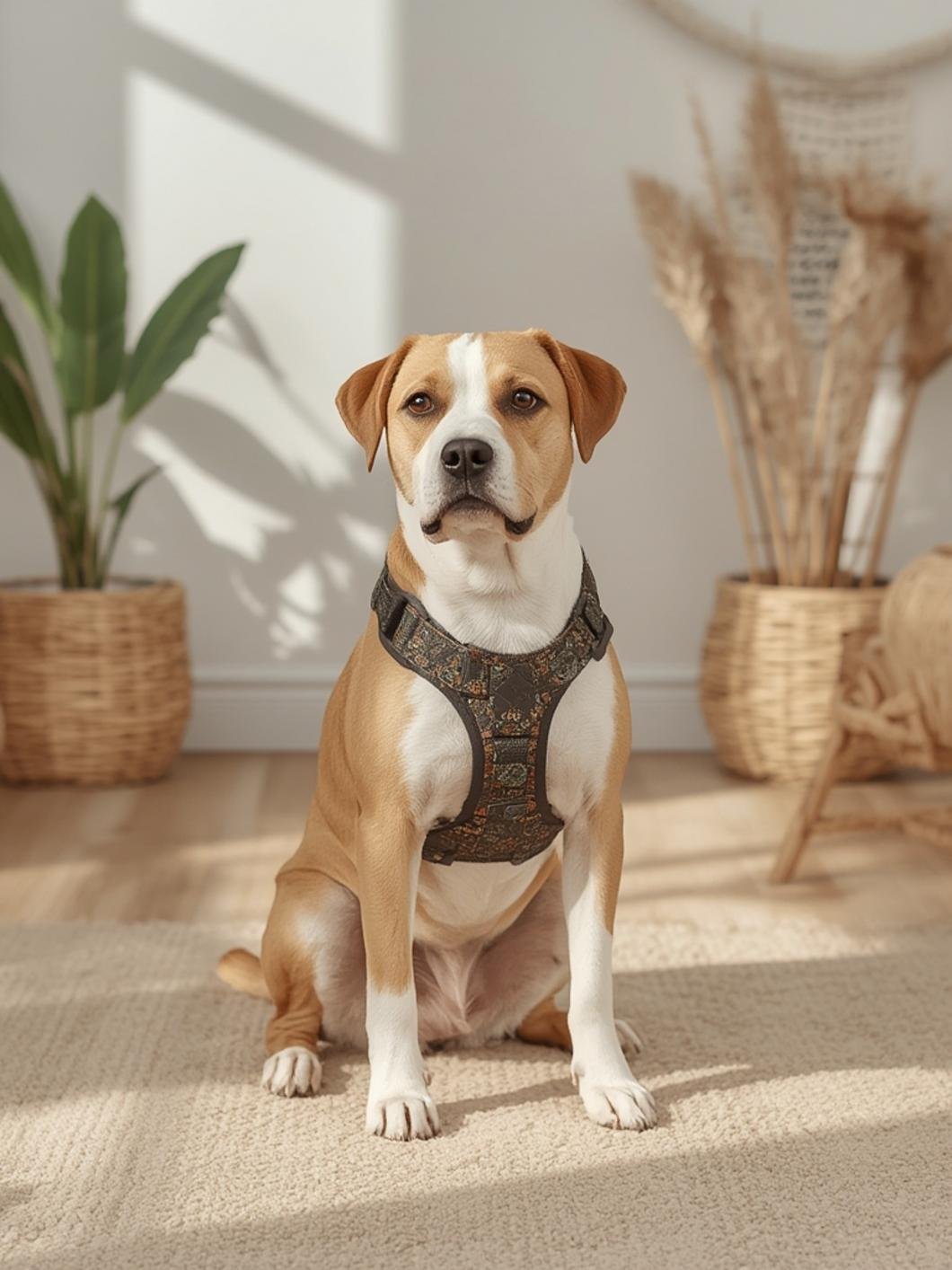
- Chest girth: measure around the widest part of the rib cage, just behind the front legs. This is the most important measurement.
- Neck: measure around the base of the neck, where a collar would sit low.
- Weight: use it to check the brand’s size chart.
- If between sizes: choose the larger size and adjust down, especially for growing puppies.
How to put on a no-pull harness
- Loosen all straps before you start.
- Slip the neck loop over your dog’s head (or have them step in, depending on the design).
- Bring the belly strap under the chest, behind the front legs, and buckle it on the side.
- Center the front ring on the breastbone, not low on the chest.
- Adjust each strap until you can slide two fingers under it.
- Check that the straps sit about two finger-widths behind the armpits so they do not rub.
Signs a harness does not fit
- Your dog can back out of it.
- Red, bald or rubbed patches behind the front legs.
- The harness twists to one side during walks.
- The front ring hangs low between the legs.
- Your dog walks with a shortened stride or seems uncomfortable.
Training makes the real difference
A no-pull harness is a management tool, not a cure. Most dogs pull because pulling works: it gets them to the next smell faster. To teach loose-leash walking:
- Reward your dog with a small treat whenever the leash is loose and they are next to you.
- When the leash tightens, stop and wait. Move forward again when it loosens.
- Change direction often so your dog learns to pay attention to you.
- Practice in quiet places first, then build up to busier streets.
- Let your dog sniff on cue. Sniffing is mentally tiring and a great reward.
Small, healthy treats make this easier. See our list of healthy dog treats for training. For reactive or fearful dogs that lunge on leash, also read how to stop dog barking.
Harnesses to avoid
Prong collars, choke chains and shock collars may stop pulling through pain or fear, but they can cause injury and increase anxiety and aggression. The American Veterinary Society of Animal Behavior recommends reward-based training and avoiding aversive tools. Tight “anti-pull” harnesses that squeeze under the armpits work through discomfort too and are best avoided.
Frequently asked questions
Do no-pull harnesses actually work?
They reduce pulling for many dogs, especially when combined with training. They do not teach loose-leash walking by themselves.
Are front clip harnesses bad for dogs’ shoulders?
A well-fitted Y-shaped harness that leaves the shoulders free is considered safe. Harnesses with a straight strap across the shoulders may restrict movement.
Can my dog wear a harness all day?
It is best to take it off at home. Harnesses left on all day can rub, trap moisture, and catch on things.
What is the best harness for a small dog that pulls?
A lightweight dual-clip or front-clip harness with soft padding. Avoid pulling on collars, since small breeds are prone to tracheal collapse.
Should a puppy wear a harness?
Yes. A harness is a gentle choice for puppies learning to walk on a leash. Check the fit often, since puppies grow quickly.